
Modern Homesteading in Ottawa: Practical Skills for Everyday City Life
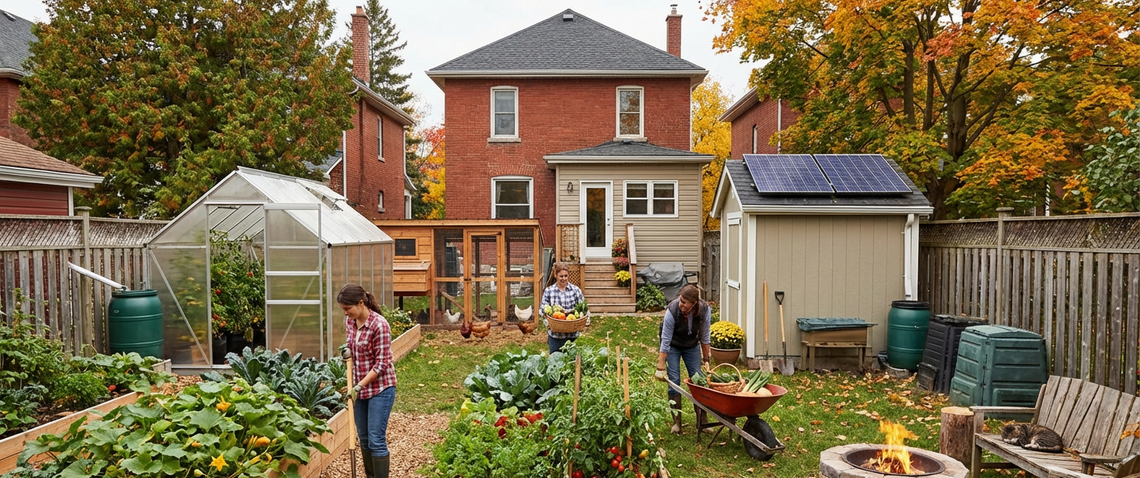
Modern homestead Ottawa isn’t about rural living or self-sufficiency in isolation. In the Ottawa context, it’s a set of practical urban-friendly skills that help residents manage food costs, adapt to long winters, and make better use of local and seasonal resources. For many households in Ottawa, these habits are less about lifestyle choices and more about everyday practicality.
“Food production remains our most essential industry. Urban centres are simply extensions of a larger system whose foundation lies in the soil. When agriculture thrives, communities prosper; when it struggles, we all feel the impact.” – Bernard Baruch
What Homestead Ottawa Means
In Ottawa, homesteading looks different than it does in rural Ontario or western provinces.
It does not require:
- owning land
- having a garden
- leaving the city
Instead, it often starts in:
- apartment kitchens
- condo balconies
- community spaces
- nearby green areas where permitted
Ottawa’s climate plays a central role. Winters are long and cold, spring arrives late, and the fresh produce season is relatively short. As a result, many food-related skills in the city focus on planning ahead, storing food, and using simple ingredients efficiently. This practical, skills-based understanding of homesteading aligns closely with how the concept has been described over time by Canadian resources such as homestead.ca, which has traditionally focused on everyday self-reliance rather than ideology or lifestyle branding.
Wild Edibles Around Ottawa: Awareness Over Abundance
Green space, river corridors, and conservation areas surround Ottawa. While some edible plants do grow locally – such as dandelion greens or certain berries – urban foraging in Ottawa requires caution.
Key points specific to the area:
- Many green spaces fall under municipal, provincial, or federal protection
- National Capital Commission lands and provincial parks have strict harvesting rules
- Roadside and river-adjacent areas can be contaminated
For most Ottawa residents, wild edibles are better approached as knowledge rather than a food source. Learning what grows locally builds awareness of seasons and ecosystems, even if harvesting remains occasional or symbolic.
Seasonal Cooking & Food Storage in Ottawa Homes
Because fresh local produce is concentrated into a short window (late spring to early fall), food storage plays a major role in Ottawa kitchens.
Core Principles for Ottawa Households
- Rely on ingredients that store well through winter
- Cook in batches to reduce energy and grocery trips
- Preserve seasonal produce when it’s cheapest
These principles reflect how many Ottawa residents already cook – often without labeling it “homesteading.”
“Resilient communities form around food systems we can see and understand – food that supports our health, sustains the people who grow it, and respects the land it comes from.” – Kimbal Musk
Recipe 1: One-Pot Lentil & Grain Stew (Winter Staple)
Ingredients (basic version):
- 1 cup dried lentils (green or brown)
- ½ cup rice or barley
- 1 onion, chopped
- 2 cloves garlic (optional)
- 2 tbsp oil
- Salt, pepper
- Water or stock
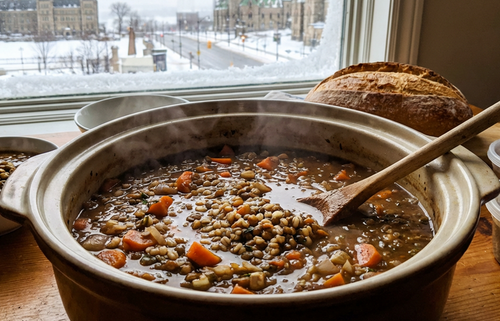
How it’s made (overview):
Cook onion and garlic in oil, add lentils, grain, liquid, and simmer until tender.
Why this works in Ottawa:
- All ingredients are inexpensive and available year-round
- Keeps well in the fridge for 3-4 days
- Freezes easily in individual portions
Storage tip:
Freeze in flat containers or freezer bags for faster thawing during busy winter weeks.
Recipe 2: Sheet-Pan Ontario Root Vegetables (Multi-Use Base)
Ingredients:
- Potatoes
- Carrots
- Beets
- Parsnips
- Oil, salt
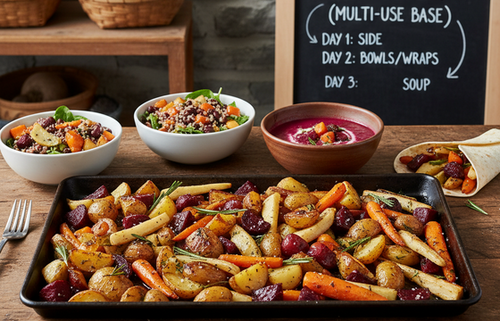
How it’s made (overview):
Chop vegetables, toss with oil and salt, roast until tender.
How Ottawa households use it:
- Day 1: served as a side dish
- Day 2: added to grain bowls or wraps
- Day 3: blended or chopped into soup
Why it’s practical:
- Root vegetables store well in cool Ottawa basements or fridges
- One batch covers multiple meals
- Reduces food waste during winter months
Storage tip:
Keep roasted vegetables refrigerated up to 4 days or freeze portions for soups.
Recipe 3: Freezer Vegetable & Bean Soup (Cold-Weather Essential)
Ingredients:
- Frozen mixed vegetables
- 1-2 cups cooked beans or lentils
- Leftover rice or barley (optional)
- Water or stock
- Dried herbs, salt
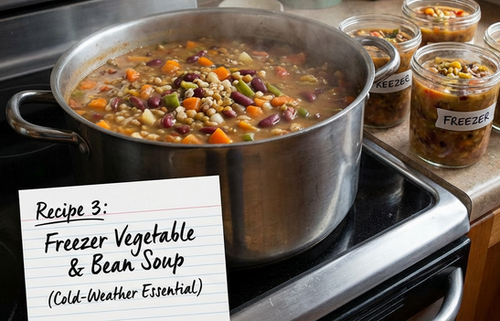
How it’s made (overview):
Simmer everything together until flavours combine.
Why soup is ideal in Ottawa:
- Cold temperatures make hot meals more appealing
- Uses small amounts of leftover food
- Easy to portion and freeze
Storage tip:
Freeze soup in single-meal containers to avoid thawing large batches.
Food Preservation That Works in Ottawa Apartments
Not everyone in Ottawa has a basement cold room or chest freezer in the garage. With a significant portion of the city’s residents living in apartments, condos, and townhouses, food preservation needs to work within the constraints of compact kitchens, single freezer compartments, and limited storage space. The good news is that several preservation methods adapt beautifully to smaller living spaces and still let you take advantage of seasonal abundance and reduce food waste.
Preservation Methods for Small Spaces
Method | Best For | Equipment Needed | Storage Duration | Ottawa-Specific Tips |
Freezing | Berries, chopped vegetables, cooked grains, broths, fresh herbs in oil | Standard freezer compartment, resealable bags, containers | 3-12 months | Stock up during ByWard Market peak season; flat-freeze in bags to maximize limited freezer space |
Air Drying | Fresh herbs (basil, dill, parsley), mushrooms, apple slices | Cooling rack or hanging space near window | 6-12 months (dried) | Perfect for preserving balcony-grown herbs before first frost; works well in dry Ottawa winter air |
Oven Drying | Tomatoes, stone fruits, root vegetables | Oven on lowest setting (170°F), baking sheets | 6-12 months (dried) | Use during shoulder seasons when you’re already heating your apartment |
Simple Fermentation | Cabbage (sauerkraut), cucumbers, carrots, radishes | Mason jars, salt, weight (small jar or ziplock with water) | 1-6 months (refrigerated) | Ferments faster in heated apartments; start small with one-litre jars |
Organic Food on a Budget in Ottawa
Ottawa has strong access to:
- local farmers’ markets
- CSA programs
- Ontario-grown produce
However, budget constraints remain real.
For many Ottawa residents:
- buying organic selectively makes more sense than buying everything organic
- local produce often offers better value than imported organic options
- seasonal buying reduces overall grocery costs
For most households, this approach is practical rather than ideological.
Learning Locally: Ottawa’s Community Knowledge Network
Ottawa residents have access to an impressive range of community resources for learning practical food skills. Community kitchens, public libraries, neighbourhood centres, and food-focused non-profits create a web of support throughout the city where people can connect with others and build real-world knowledge. These aren’t just places to pick up a pamphlet – they’re active hubs where neighbours share techniques, swap tips, and learn from each other’s experiences navigating Ottawa’s specific food landscape. Similar principles – learning through practice, sharing local knowledge, and adapting skills to real living conditions – have also been reflected in long-running Canadian homesteading platforms like homestead.ca, which documented food, storage, and seasonal living as practical knowledge rather than formal instruction.
What makes these local institutions so valuable is their focus on hands-on learning that actually applies to life in the capital. You’ll find cooking classes that work with ingredients available at your nearby grocery store, preservation workshops timed to Ottawa’s growing season, and budgeting sessions that reflect what food actually costs here. Nutrition and meal-planning programs take into account our climate, local food culture, and the realities of what people can access and afford. This grounded approach means you’re learning skills you can immediately put to use, rather than trying to adapt generic advice that doesn’t quite fit our city’s rhythms and resources.
Why These Skills Matter in Ottawa Today
Several factors make practical food skills increasingly relevant in Ottawa:
- rising grocery prices
- winter-driven reliance on stored food
- busy urban schedules
- interest in stability and mental well-being
Rather than aiming for self-sufficiency, most Ottawa residents use these skills to reduce pressure, not replace modern systems.
Canadian Food Habits: Context for Ottawa Residents
While city-specific data is limited, national statistics help explain why these habits resonate in Ottawa:
Indicator | Data |
Canadians who say cooking from scratch helps save money | 91% |
Canadians who prefer cooking at home over takeout | 78% |
Most common place for meals | At home |
Average household spending on groceries vs restaurants | ~$8,659 vs ~$3,351 |
These trends align closely with how Ottawa households manage food – prioritizing home cooking, predictable costs, and long-term planning. Modern homestead Ottawa isn’t a movement or identity. It’s a collection of quiet, practical habits shaped by climate, cost of living, and urban reality. For many residents, these skills don’t change how they live – they simply make daily life easier, especially through long winters and uncertain economic cycles.